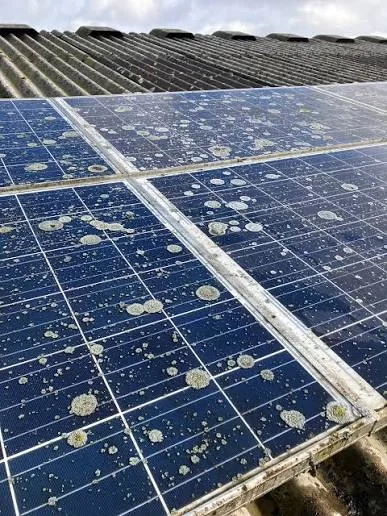
Coastal air, bird droppings, leaves and seasonal weather all influence how dirty a Gold Coast solar array becomes. But there's no honest one-size-fits-all rule that every solar system must be professionally cleaned twice a year. The right approach is to monitor performance, inspect from a safe position and respond to visible or persistent soiling.
Does rain clean solar panels?
Rain can wash away some loose dust and light debris, particularly on inclined panels. It may not remove stubborn bird droppings, lichen-like deposits, sticky tree residue or grime concentrated near panel frames. Panels installed at a flatter angle may retain deposits differently from steeper arrays. The amount of soiling varies between homes.
When is professional cleaning worth considering?
- Bird droppings: Repeated deposits from nearby roosting areas can create persistent patches.
- Overhanging trees: Leaves, pollen, sap and shade may contribute to reduced performance.
- Coastal exposure: Sea spray and airborne deposits may warrant observation, depending on the property.
- Long dry periods: Dust can accumulate when there has been little rain.
- Visible streaks or heavy build-up: Especially when deposits remain after rain.
- Unexplained lower output: Compare monitoring data first; dirt is only one potential cause.
How do you know if dirty panels are costing you money?
Start with your inverter or monitoring app, if it offers generation history. Compare periods with similar weather, sunlight and seasons. Check whether new trees or building shade could explain a difference. A sudden drop to zero is usually a stronger reason to investigate a fault than to book cleaning alone.
Cleaning can help where dirt blocks sunlight, but it cannot fix a failed inverter, bad connection or damaged panel. Avoid businesses that promise a fixed percentage improvement regardless of panel condition.
What should safe professional cleaning involve?
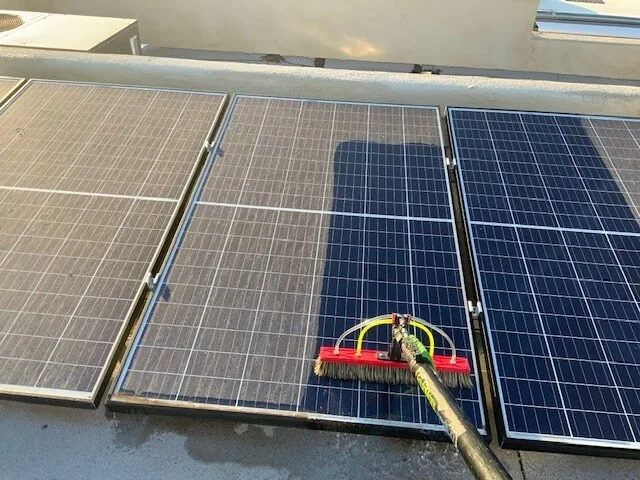
Panels should be assessed for obvious damage before cleaning. Manufacturer guidance matters: Queensland's Electrical Safety Office recommends water rather than unsuitable chemical products, no abrasive scourers and no high-pressure cleaners. Workers must also use safe methods for accessing the roof; homeowners should not climb onto the roof to clean panels.
Cracked glass, damaged wiring or other electrical defects need assessment by a licensed electrician before cleaning proceeds. Cleaning is not a substitute for electrical inspection or testing.
Does cleaning include a solar safety inspection?
Not automatically. A cleaning service typically addresses surface deposits and may identify visible concerns. Electrical testing, fault diagnosis and compliance assessment are separate services performed by appropriately licensed personnel. Ask exactly what is included in a cleaning quote.
How much does solar panel cleaning cost?
Our Gold Coast cleaning page lists indicative starting prices by panel count: up to 10 panels from $149, 11–20 from $189, 21–30 from $229 and 31–40 from $269. These rates apply to standard, safely accessible residential jobs; heavy soiling, roof access, specialist equipment and travel may change the final quote. Any additional costs should be confirmed before booking.
Our suggested care routine
- Check generation trends occasionally using your app or inverter's regular display.
- Look for obvious dirt or damage from the ground, not from the roof.
- Follow your installer’s and panel manufacturer’s maintenance schedule.
- Arrange an appropriate professional inspection if you see damage, persistent fault codes or unexplained underperformance.
- Consider cleaning when deposits are substantial or remain after rainfall.
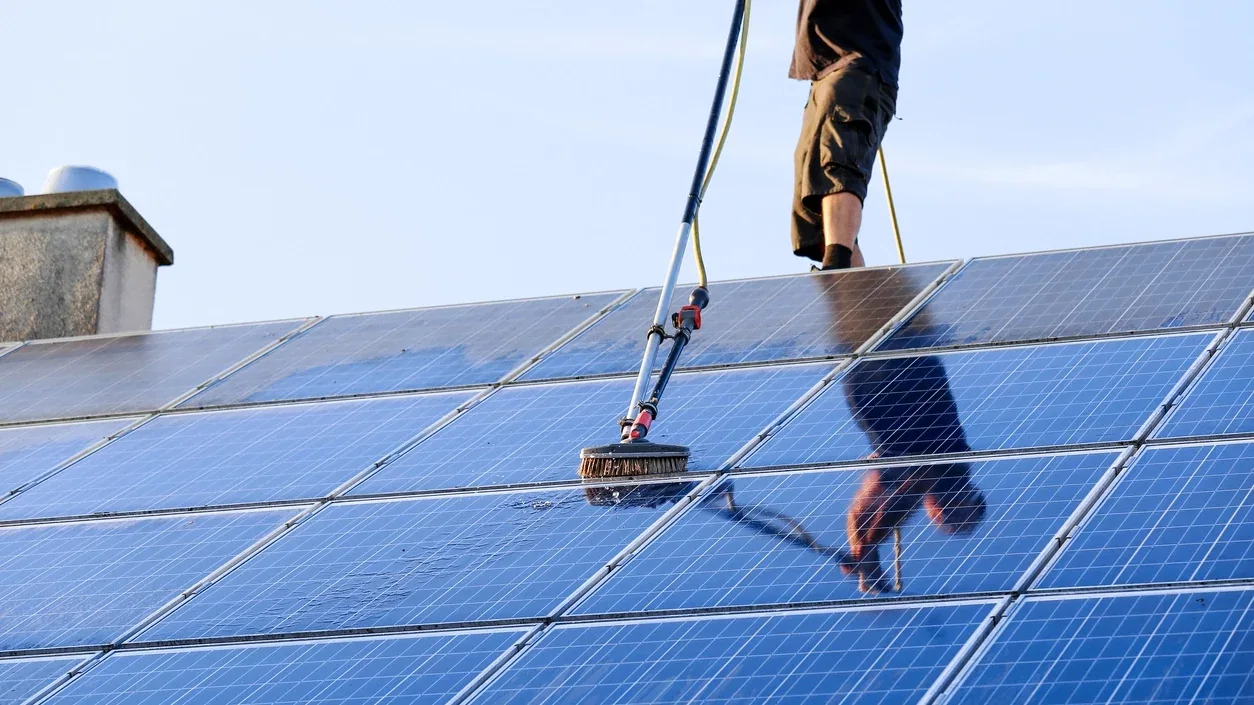
Interested in a quote? Visit our solar panel cleaning service or contact us with your approximate panel count, suburb and roof details.
Need help with your solar on the Gold Coast?
Tell us what your system is doing, where you're located and whether you have a warning code. We'll discuss the appropriate next step.
Get help with my solar →Useful official resources
General information only. Electrical work and system diagnostics require appropriately licensed professionals. Site conditions, manufacturer requirements and system configurations vary.